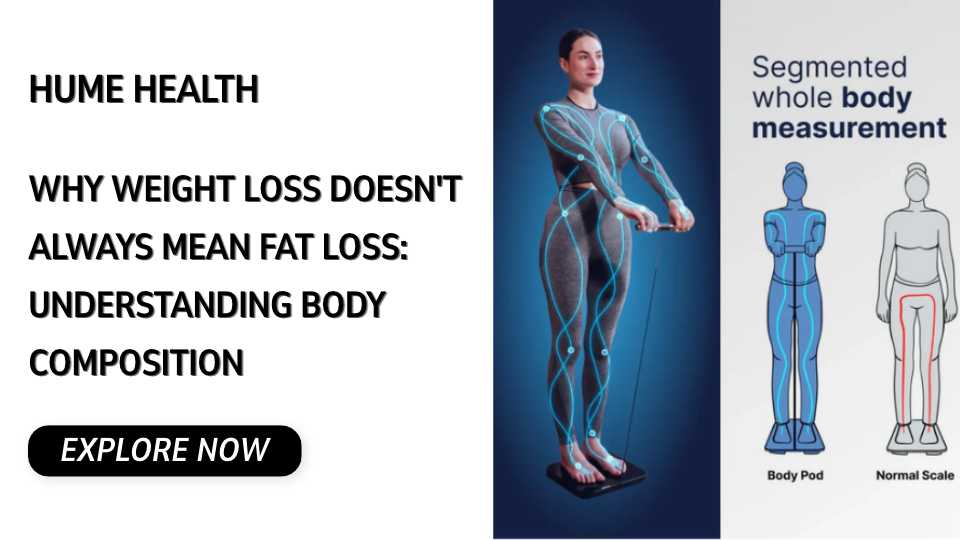
Many people measure their fitness progress by checking their weight, but the number on a bathroom scale does not always tell the complete story. Losing weight and losing body fat are two different things. Sometimes, a person may lose muscle and water along with fat, while another person may build muscle and reduce body fat without experiencing a major change in total weight.
Table Of Content
- Weight Loss vs. Fat Loss: What Is the Difference?
- Why Muscle Mass Matters During Weight Management
- How to Recognize Changes Beyond Body Weight
- Features to Consider When Choosing a Body Composition Analyzer
- How Hume Health Supports Body Composition Tracking
- Understanding the Limitations of Body Composition Tracking
- Frequently Asked Questions
- 1. Can you lose fat without losing weight?
- 2. Is fat loss better than weight loss?
- 3. How can I track fat loss at home?
- 4. Does gaining muscle increase body weight?
- 5. Can Hume Health track muscle and body fat?
- Conclusion
Understanding the difference between weight loss vs. fat loss can help you make more informed decisions about nutrition, exercise, and overall wellness. Instead of focusing entirely on one number, looking at body composition provides a broader perspective. Modern health technology, including Hume Health’s body composition tracking devices, offers another way to monitor these changes over time.
Weight Loss vs. Fat Loss: What Is the Difference?
Weight loss refers to a reduction in total body weight. This includes changes in several components, such as:
- Body fat
- Muscle tissue
- Water
- Bone and other body tissues
Fat loss specifically refers to reducing the amount of fat stored in the body. It is often a more meaningful goal for people who want to improve their body composition while maintaining muscle.
For example, someone who starts exercising regularly may lose fat while developing additional muscle. Their overall weight might change very little, even though their body composition is improving.
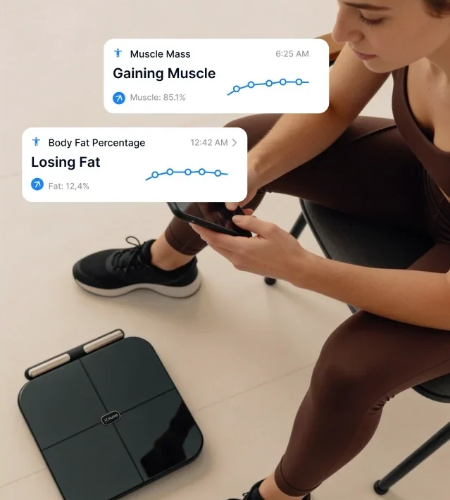
This is why weight alone cannot explain every fitness result.
Why Muscle Mass Matters During Weight Management
Muscle plays an important role in movement, physical strength, and everyday activities. It also contributes to the body’s energy requirements.
During weight management, preserving muscle is an important consideration. Rapid or poorly planned weight loss can involve reductions in muscle mass, particularly when nutrition and resistance exercise are neglected.
Several habits can support a more balanced approach:
Include protein in your meals: Protein provides amino acids needed for muscle maintenance and repair.
Practice resistance training: Activities such as weightlifting and bodyweight exercises can support muscle development.
Avoid extreme calorie restriction: Very restrictive eating patterns can make it harder to meet nutritional needs.
Prioritize recovery: Adequate sleep and rest days support recovery after physical activity.
Track progress consistently: Looking at multiple measurements can provide more context than checking body weight alone.
The objective is not simply to make the number smaller but to develop sustainable habits that support overall physical health.
How to Recognize Changes Beyond Body Weight
Your body can change in several ways that may not immediately appear on a traditional scale.
Some useful indicators include:
- Waist measurements: Changes around the waist can provide additional information about body-size trends.
- Clothing fit: Changes in how clothes fit may reflect differences in body measurements.
- Strength improvements: Lifting heavier weights or completing more repetitions can indicate progress in physical performance.
- Energy levels: Consistent nutrition and exercise habits may influence how energetic you feel.
- Body composition estimates: Measurements of fat mass and muscle mass provide additional information about changes in your body.
No single indicator provides a complete picture. Combining several observations can make progress tracking more useful.
Features to Consider When Choosing a Body Composition Analyzer
Not every smart scale offers the same measurement capabilities. Before selecting a device, consider the following features.
1. Multiple Measurement Options
Look for a device that provides more information than basic body weight. Depending on the model, this may include estimates of body fat, muscle mass, and body water.
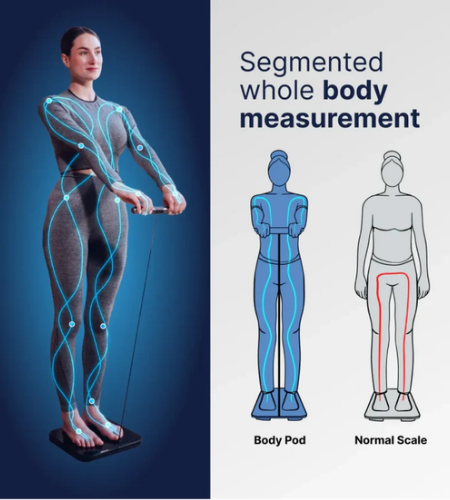
2. Segmental Body Analysis
Some advanced devices estimate measurements across different body sections. This can offer additional context when monitoring changes in the arms, legs, and torso.
3. Smartphone Compatibility
An accompanying app can make it easier to review previous measurements, recognize patterns, and maintain a consistent tracking routine.
4. Multiple User Support
For households where several people want to monitor their measurements, individual user profiles can make tracking more convenient.
5. Transparent Pricing and Policies
Compare the current device price, warranty coverage, return conditions, and optional subscription costs before making a purchase.
How Hume Health Supports Body Composition Tracking
Hume Health focuses on connected wellness technology designed to help people understand different aspects of their health.
Its Hume Pod is an at-home body composition analyzer that combines weighing sensors, hand electrodes, and a connected smartphone application. The product is designed to estimate multiple measurements, including body fat, muscle mass, and other body composition indicators.
According to its official product information, the Hume Pod provides 45 body composition measurements. Its segmental measurement approach is intended to offer additional information about different areas of the body rather than relying exclusively on total weight.
The accompanying Hume Health app allows users to review their measurements and follow changes over time.
This can be particularly useful for people whose fitness goals involve monitoring muscle development and body fat changes rather than simply reaching a specific weight. Hume Health+1
Understanding the Limitations of Body Composition Tracking
Smart body composition devices can provide useful estimates, but their readings should not be treated as perfect measurements.
Many devices use bioelectrical impedance analysis, which estimates body composition through electrical measurements. Hydration, recent exercise, food intake, and other factors can influence the results.
For better comparisons, measure under similar conditions and focus on longer-term patterns instead of individual readings.
It is also important to remember that smart scales cannot independently diagnose medical conditions or replace professional health assessments.
Frequently Asked Questions
1. Can you lose fat without losing weight?
Yes. You may reduce body fat while maintaining or increasing muscle mass. This can result in little overall change in body weight.
2. Is fat loss better than weight loss?
It depends on your goals. For many fitness-focused individuals, reducing excess body fat while maintaining muscle is more useful than focusing exclusively on total weight reduction.
3. How can I track fat loss at home?
You can combine waist measurements, progress photographs, fitness performance, and body composition estimates from compatible smart devices.
4. Does gaining muscle increase body weight?
It can. Muscle development may increase total body weight, even when body fat is decreasing.
5. Can Hume Health track muscle and body fat?
The Hume Pod is designed to estimate muscle mass, body fat, and additional body composition measurements through its connected app. Hume Health+1
Conclusion
Understanding weight loss vs. fat loss can change how you approach fitness and wellness. Your total weight is only one measurement, and it does not always reflect changes in muscle, fat, or overall body composition.
A balanced approach that includes nutritious meals, resistance training, recovery, and consistent progress tracking can provide a more useful foundation for long-term goals.
For people who want additional measurement information at home, Hume Health offers the Hume Pod as a connected body composition tracking option. Exploring its features and app capabilities can help you decide whether this technology fits your personal tracking routine.